A new report by Al-Haq lays out a devastating reality: Israel’s military campaign and blockade policies in the Gaza Strip have shattered reproductive healthcare, leaving pregnant women, new mothers, and newborns in lethal conditions.
Titled Violence Against Mothers in Gaza: Birth, Postpartum, and Death Amidst an Ongoing Genocide, the report argues that the collapse of maternal care is not an unavoidable byproduct of war. It is a foreseeable and preventable outcome of sustained military operations and sweeping restrictions on fuel, medicine, and humanitarian aid imposed by Israel.
The picture it paints is hard to read and harder to imagine living through.
Giving Birth Without Safety
In northern Gaza, maternity wards that once handled dozens of deliveries a day now operate sporadically, if at all. Some hospitals have been struck and partially destroyed. Others remain standing but function without reliable electricity, clean water, or enough staff.
Doctors use phone flashlights when generators fail. Surgical tools are sterilized as best they can in overcrowded rooms. Women in obstructed labor wait for hours because no operating theater is available. Pain relief is limited. Some cesarean sections are performed with minimal anesthesia.
Outside hospital walls, conditions are even more dire.
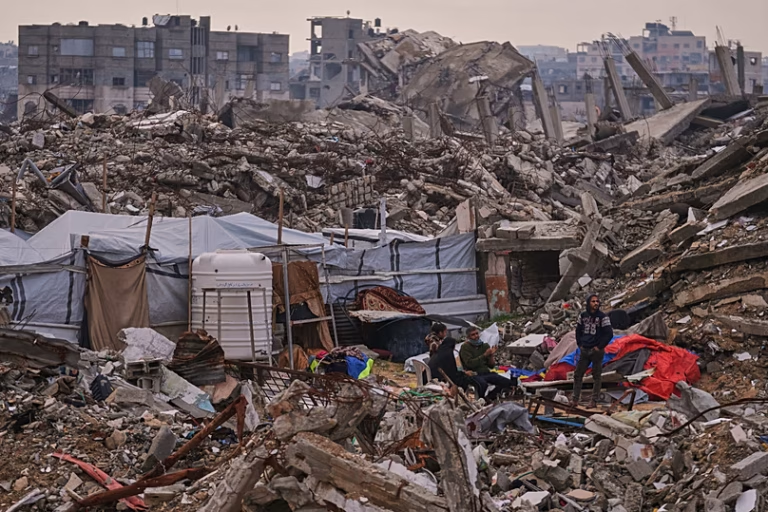
Displaced families shelter in thin tents that offer little protection from winter wind and rain. Pregnant women sleep on damp ground or thin mats. Many are anemic after months of food shortages. They queue for small portions of rice or canned goods. Protein, fresh vegetables, and prenatal vitamins are scarce.
When labor begins, ambulances often lack fuel. Women are carried on carts or walk through rubble-strewn streets, doubled over in pain. Some give birth in classrooms converted into shelters, separated from strangers by hanging sheets.
Deaths of the Newborns
The report’s section on newborn deaths is among its most devastating. It documents babies who survived pregnancy and delivery, only to die days later from causes that would be preventable under normal conditions.
According to Al-Haq, some infants died of hypothermia after being discharged into makeshift tents with no heat. Others succumbed to infections because antibiotics were unavailable or delayed. Premature babies, born amid stress and malnutrition, often required incubators and respiratory support that hospitals could not reliably provide due to electricity shortages and damaged equipment.
Mothers describe being told their newborn needed oxygen or specialized care, only to learn that machines were not functioning or supplies had run out. Fuel shortages meant generators could not operate continuously. When the power failed, so did life-sustaining equipment.
Malnutrition has compounded the crisis. Women facing food scarcity are more likely to deliver underweight or premature babies. After birth, mothers weakened by hunger and dehydration struggle to produce enough milk. Infant formula, when available, requires clean water and sterilized bottles—both difficult to secure where water infrastructure has been heavily damaged.
“The excruciating pain of witnessing the suffering of their newborns has resulted in profound psychological trauma,” Al-Haq writes. “For mothers, witnessing the death of a newborn – or surviving a near-fatal delivery devoid of all necessary medical provisions and in an unsterile environment, with often no home to return to as a result of being repeatedly forcibly displaced – leads to profound psychological trauma and lasting mental harm, often compounded by an immense sense of helplessness, guilt, and grief.”
The report documents the account of a woman, who lost her premature newborn boy, Ali, due to the severe cold in her tent in Khan Yunis in December 2024:
After a week [of his birth], I woke up at night and held my baby to feed him. He opened his mouth, he wanted to breastfeed, but then he closed it. I put him down, and blood started to pour down from his nose and mouth. I screamed for my husband, who took him to the hospital. The doctors told us that he died of hypothermia.
These are deaths that would be rare in a functioning health system.
Postpartum Without Care
Childbirth is only the beginning. Postpartum bleeding, infections, and other complications require follow-up treatment. Many women receive none.
Clinics that once offered routine checkups are closed or overwhelmed. Antibiotics run out. Sanitary supplies are limited, increasing the risk of infection. Women recovering from surgery haul water containers and search for firewood days after delivery because there is no one else to do it.
Psychological trauma deepens the physical strain. Some women give birth while grieving relatives killed in airstrikes. Others deliver knowing their homes no longer exist. The report recounts mothers who have lost multiple children over months of bombardment and displacement.
The Role of Israel’s Policies
The cumulative impact of airstrikes, infrastructure destruction, and tight control over fuel and medical supplies has hollowed out Gaza’s healthcare system. Without fuel, hospitals cannot power incubators or water pumps. Without consistent entry of medical supplies, even routine births become dangerous. Damaged roads and limited ambulances turn delays into fatal risks.
UNICEF and other international agencies have repeatedly warned that mothers and newborns face life-threatening conditions. Yet the situation continues to deteriorate.
Under international humanitarian law, medical facilities are granted special protection during armed conflict. In Gaza, however, the destruction of healthcare infrastructure and restrictions on essential supplies have created conditions where childbirth resembles a disaster zone more than a hospital.
A Measure of the Crisis
Destruction in Gaza is often counted in buildings reduced to rubble. This report asks readers to look closer: delivery rooms without electricity, mothers hemorrhaging without adequate care, newborns wrapped in damp blankets against winter cold.
In ordinary times, childbirth marks the beginning of hope. In Gaza today, it is an act of endurance. The most fragile lives are entering the world in conditions shaped by military decisions and blockade policies. For many families, those first days are not filled with celebration, but with fear that survival itself is uncertain.
Read/download the report below
©TNPP
Discover more from The New Palestine Post
Subscribe to get the latest posts sent to your email.