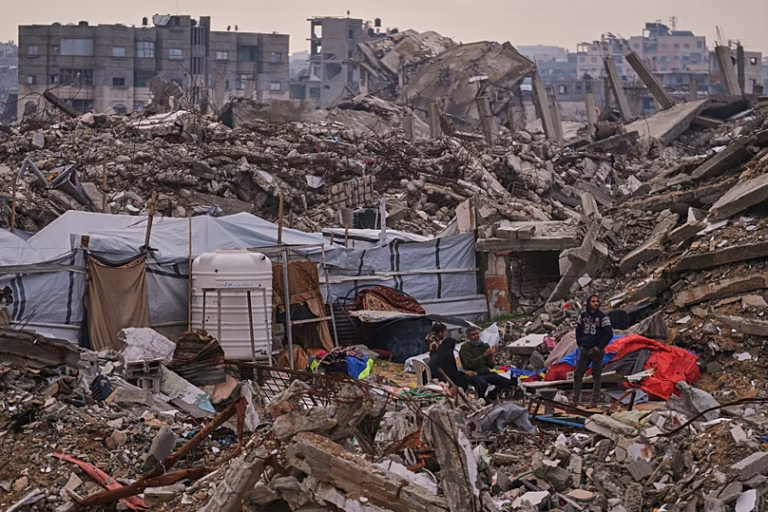
Smoke rises after an airstrike hit a building in the al-Mawasi area of Khan Yunis, Gaza despite the ceasefire on January 31, 2026. ©Abed Rahim Khatib – Anadolu Agency
The United Nations Office for the Coordination of Humanitarian Affairs (OCHA) has warned that the past 24 hours in Gaza have seen continued airstrikes, shelling, naval fire, and shooting, including attacks in residential areas that put civilians at severe risk. The agency highlighted that these attacks exacerbate the already immense suffering experienced by Gazans over the past 28 months.
OCHA stressed that civilians are protected under international humanitarian law, regardless of their proximity to military positions. “Civilians and civilian infrastructure must always be protected, and during military operations, constant care must be taken to spare them,” the agency said.
Meanwhile, the UN Relief and Works Agency (UNRWA) reported progress on healthcare access, reopening the Bureij Health Centre in Deir al-Balah. The facility had been closed for months and now provides primary health care, maternal health services, laboratory testing, and dental care.
Despite this reopening, health authorities warned that thousands of patients remain without access to critical treatment, as essential services are still limited. Scaling up care in Gaza requires repairing damaged facilities and expanding critical services, a task complicated by the slow approval of medical equipment from Israeli authorities, including X-ray machines and laboratory supplies.
Humanitarian agencies are also responding to shelter needs. By last week, more than 5,600 families received emergency shelter, including nearly 5,000 tarpaulins and over 12,000 bedding items. Last month, similar assistance, including almost 8,000 tents, reached over 85,000 families. Partners emphasized the urgent need for more durable housing solutions, which depend on permission to bring in construction machinery and materials.
Protection services remain under strain. Over a seven-day period, partners provided psychosocial support to nearly 15,000 people, yet demand continues to exceed capacity. Overcrowding in displacement sites, damaged or lost tents, and the absence of private spaces compromise both service delivery and confidentiality.
The UN and its partners reiterated their readiness to scale up humanitarian operations, but emphasized that lifting restrictions on humanitarian work is essential. “NGOs and UN agencies must be allowed to operate without obstruction and bring in critically needed supplies and equipment,” OCHA said.
Source: OCHA
Discover more from The New Palestine Post
Subscribe to get the latest posts sent to your email.