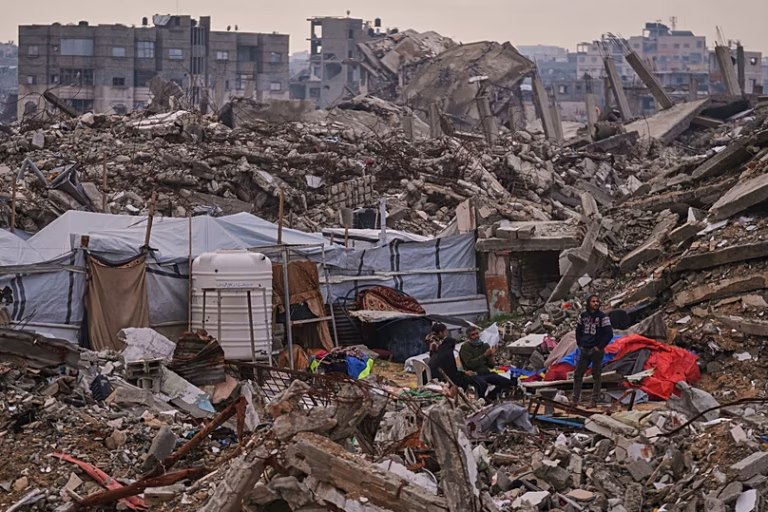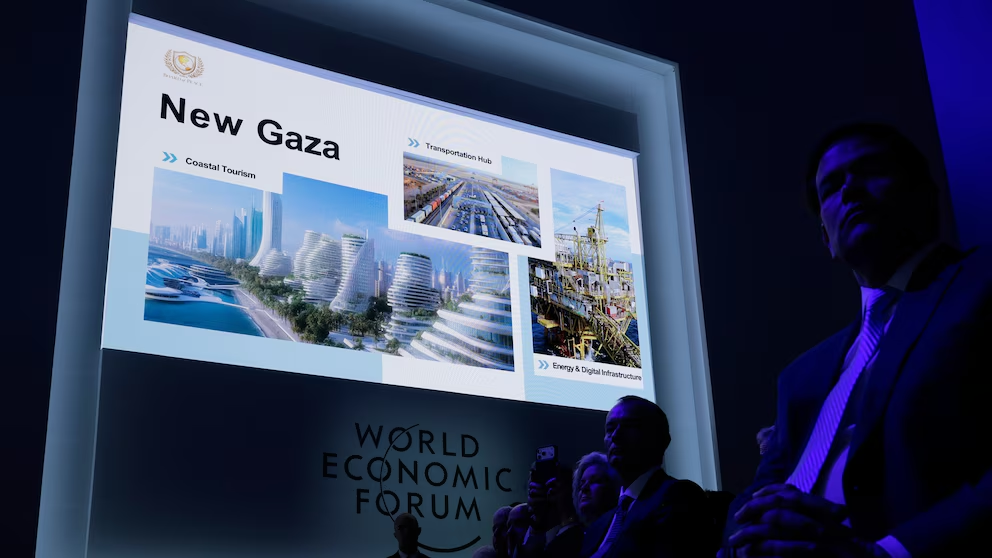
Ahmed (name changed for safety reasons) speaks quietly, but his words carry the weight of deep anger and grief. For him, the so-called “New Gaza Plan” is not a political proposal or a distant policy debate—it is a personal loss.
“I feel angry. No one knows what sadness is in my heart,” he says.
“One of the cruelest insults, wrapped in false consolation, is losing my land in what they call the New Gaza Plan.”
According to Ahmed, the plan represents far more than territorial change. He describes it as a system of imposed and closed measures that strip people of control over their own lives. The most dangerous of these, in his view, is trusteeship: the idea that an external authority, with no legitimate claim or connection to the land, could be given power over Gaza and its future.

“This is not just about land,” he explains. “It is about being told that others will decide for us, that our voices and our rights no longer matter.”
Ahmed avoids engaging in political speculation. For him, debates in foreign capitals feel detached from the reality on the ground. What matters, he says, is the everyday suffering of ordinary families who are already paying the price.
“I focus on what we are living through every day,” he says. “Plans are being discussed without us, and we are the ones who lose homes, security, and dignity.” Ahmed’s words reflect a broader sentiment shared by many in Gaza: a sense of exclusion, dispossession, and deep uncertainty about the future, shaped not by abstract policy, but by lived experience.
©TNPP
Discover more from The New Palestine Post
Subscribe to get the latest posts sent to your email.