©Getty
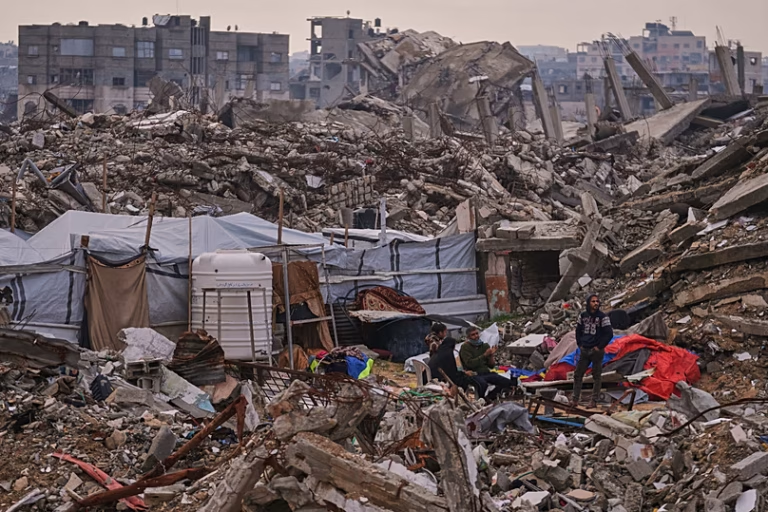
A growing movement in the global film community is calling for a cultural boycott of Israeli film institutions, with thousands of actors, directors, and film workers pledging to sever ties with groups they say are complicit in “genocide and apartheid” of Palestinians in Gaza.
The pledge, organized by Film Workers for Palestine, commits signatories to refuse participation in events, screenings, collaborations, or work involving Israeli film festivals, cinemas, broadcasters and production companies that are accused of enabling or whitewashing Israeli governmental actions in Gaza.
Who’s Signed On
Among the prominent signatories are filmmakers Yorgos Lanthimos, Ava DuVernay, Asif Kapadia, Boots Riley, and Joshua Oppenheimer; actors such as Olivia Colman, Mark Ruffalo, Tilda Swinton, Javier Bardem, Ayo Edebiri, Riz Ahmed, Josh O’Connor, and Cynthia Nixon; and other industry figures like Julie Christie, Rebecca Hall, Aimee Lou Wood, and Debra Winger.
As of early reports, the pledge has drawn over 1,200 signatories within its first publication, and by midweek had exceeded 3,900. Among later additions are Joaquin Phoenix, Rooney Mara, Emma Stone, Peter Sarsgaard, Lily Gladstone, Nicola Coughlan, Harris Dickinson, Guy Pearce, Jonathan Glazer, Ebon Moss-Bachrach, Fisher Stevens, Abbi Jacobson, Eric Andre, Elliot Page, Payal Kapadia, and Emma D’Arcy.
What the Pledge Says
- The pledge states that individuals refuse to work with Israeli film institutions “implicated” in genocide or apartheid. It also points to the role of cinema in shaping public perceptions, saying it is urgent to address complicity in the war.
- An accompanying FAQ clarifies criteria for complicity, naming major Israeli film festivals including, among others, the Jerusalem Film Festival, Haifa International Film Festival, Docaviv, and TLVFest, as partnering with the Israeli government during its campaign in Gaza.
- The pledge does not ban working with Israeli individuals per se; it targets institutional collaboration. It notes that some Israeli film entities are not considered complicit, and recommends following guidelines developed by Palestinian civil society.
Supporters argue the boycott is a form of moral accountability. Screenwriter David Farr, one of the pledge’s signatories and a descendant of Holocaust survivors, said he is “distressed and enraged” by Israeli state actions and believes the film industry has a role to play beyond artistic expression. He drew parallels with the cultural boycott of apartheid-era South Africa.
This pledge is part of a larger wave of cultural and entertainment industry responses since the war in Gaza intensified. Earlier efforts include open letters by writers condemning perceived industry silence, statements by actors’ unions in some countries, and growing debate over how Palestinian narratives are represented onscreen.
Whether or not the boycott reshapes film festivals, funding, and international collaborations, the sheer scale of the pledge demonstrates the willingness of artists to link their creative work to ethical responsibility.
In moments of silence and complicity, the act of refusal can itself become a form of storytelling. For many in the industry, this pledge signals not just opposition to war, but a belief that cinema can help illuminate paths toward justice.
And for those who have signed, hope lies in the conviction that art—when it chooses courage over neutrality—can be part of building a future rooted in solidarity, accountability, and peace.
©TNPP
Discover more from The New Palestine Post
Subscribe to get the latest posts sent to your email.