
©Committee to Protect Journalists
Amal Khalil, a prominent Lebanese journalist working for Al-Akhbar, was killed in an Israeli airstrike in southern Lebanon—an attack that has triggered international outrage and prompted Lebanon’s prime minister to describe it as a “war crime.”
Khalil, 43, was buried on Thursday. She died during what colleagues described as a sustained Israeli attack involving a “double-tap” strike pattern: an initial strike followed by a second hit on the building where she had taken shelter. Rescue teams attempting to reach her were reportedly prevented from doing so amid ongoing Israeli fire, delaying life-saving assistance.
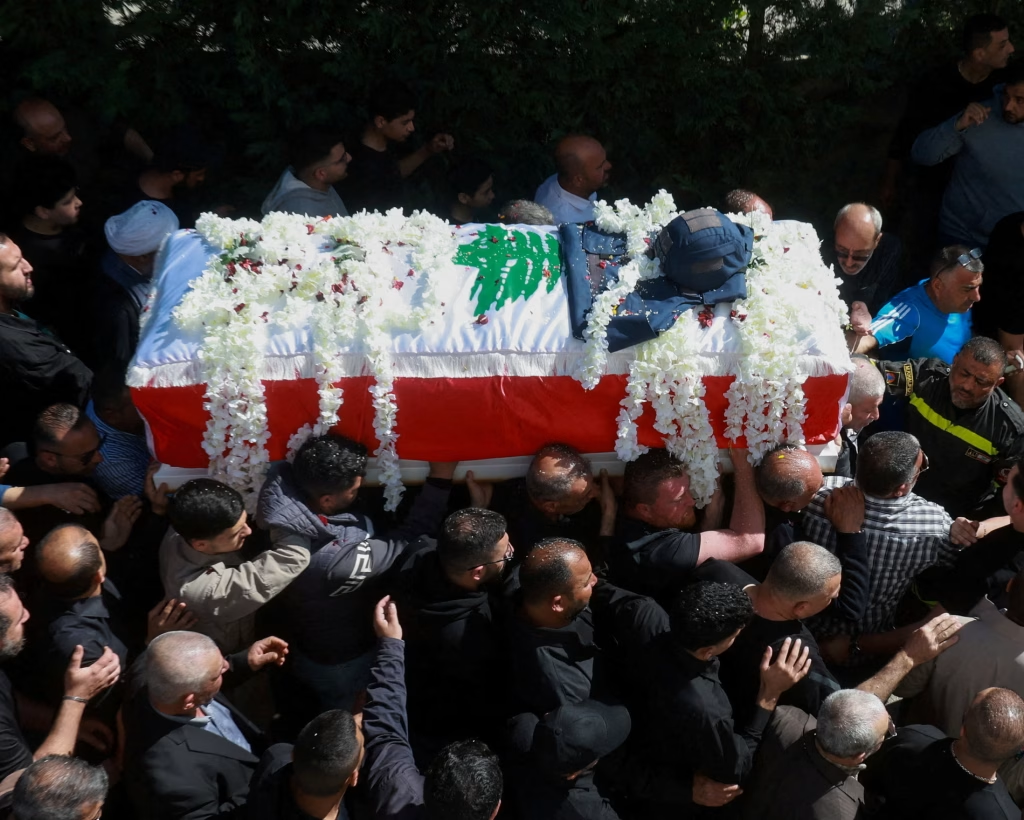
©Aziz Taher/Reuters
Her colleague was injured in the same attack.
The incident has intensified accusations that Israel systematically targets media workers in conflict zones, despite repeated denials by the Israeli military. Press freedom organisations have warned that journalists in southern Lebanon and Gaza increasingly operate under conditions where their professional role offers no meaningful protection.
Khalil’s work had long placed her at the centre of that risk. She reported from southern Lebanon during periods of intense Israeli military activity, documenting strikes, displacement, and the destruction of civilian infrastructure. Her presence in those areas was well known.
Crucially, Khalil had previously spoken publicly about receiving a direct threat via an unidentified Israeli phone number, warning her that she would be killed if she did not leave southern Lebanon, where she had been based for years. That threat has become central to how colleagues and observers interpret her killing: not as an isolated wartime casualty, but as the culmination of prior intimidation followed by lethal force.
Her death is being investigated amid mounting international scrutiny. Human rights and press freedom organisations have repeatedly documented the extreme dangers faced by journalists in Israeli military operations in Lebanon and Gaza, including obstruction of rescue efforts and repeated strikes in densely populated civilian areas.
For colleagues at Al-Akhbar, Khalil was more than a reporter. She was a witness to a war she refused to leave, even after being warned to do so. Her reporting focused on the lived reality of civilians under bombardment—stories that often remain invisible until those who document them are killed.
Her killing leaves behind unfinished work and a widening absence in a profession already marked by loss.
She was warned. She stayed. She reported. And she was killed.
©TNPP
Discover more from The New Palestine Post
Subscribe to get the latest posts sent to your email.


