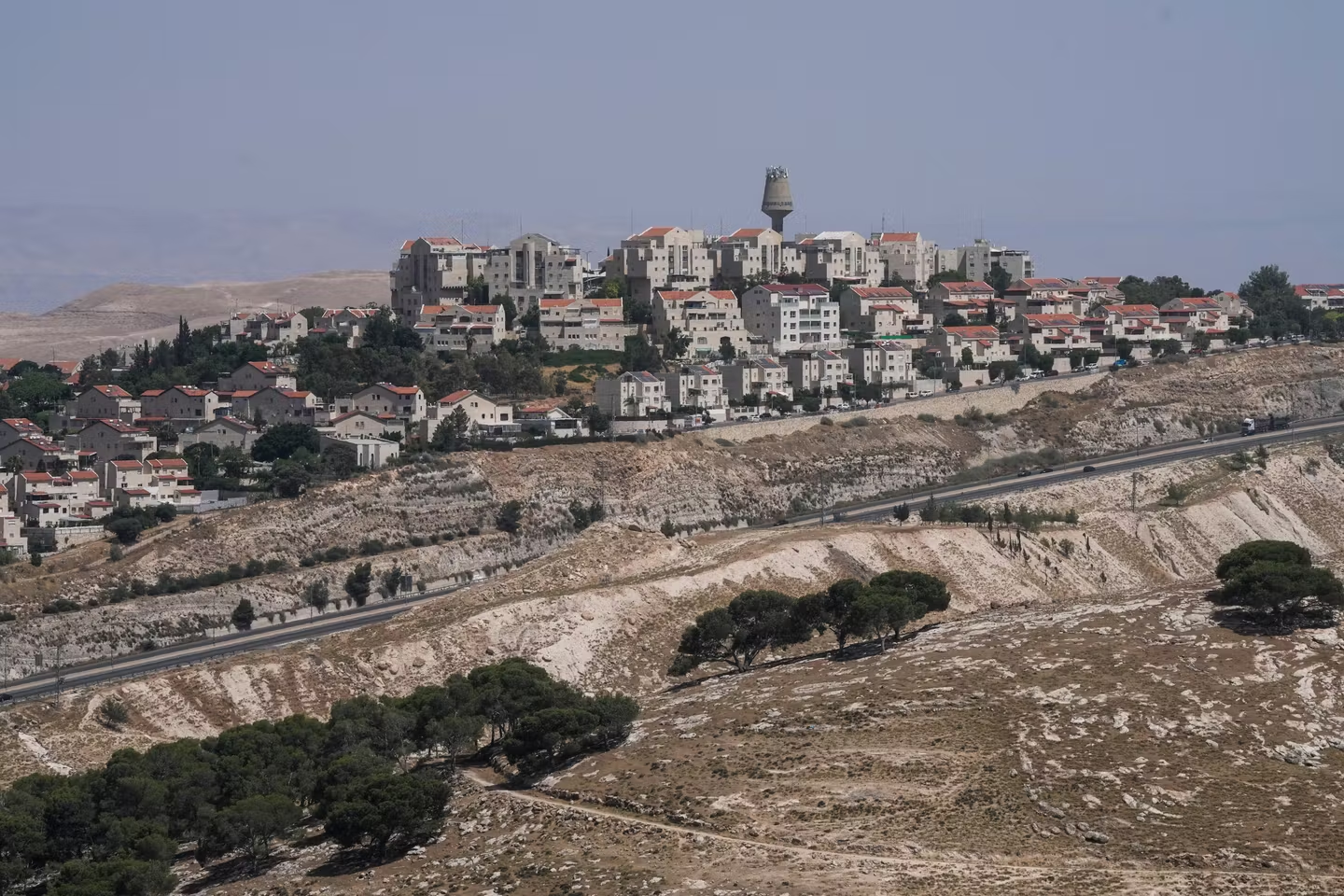
A view of the Israeli settlement of Maale Adumim, in the West Bank, June 18, 2023. ©MAHMOUD ILLEAN / AP
Israel is approving the construction of new West Bank settlements at an unprecedented rate because it knows its window of impunity is closing — especially if Iran emerges intact from the war and the Republicans lose the U.S. midterms.
Israel is rapidly expanding settlements across the West Bank in what legal experts and human rights organizations increasingly describe as a deliberate attempt to entrench an illegal territorial regime before mounting international pressure translates into concrete consequences.
In recent months, Israeli authorities have accelerated approvals for new housing units, retroactively legalized previously unauthorized outposts, and expanded infrastructure linking settlements to Israel proper. These measures are widely seen as part of a coordinated strategy to fragment Palestinian territory and render the prospect of a viable, contiguous Palestinian state effectively impossible.
Under international law, the transfer of an occupying power’s civilian population into occupied territory is explicitly prohibited. Article 49 of the Fourth Geneva Convention states that such transfers constitute a violation, a position consistently reaffirmed by the United Nations and the International Court of Justice. In its 2004 advisory opinion, the court concluded that Israeli settlements in the West Bank are illegal and must be dismantled.
Despite this legal consensus, Israel has continued to expand its settlement footprint with near-total impunity. Critics argue that the current surge reflects a narrowing window: growing legal scrutiny at international forums, including proceedings linked to the International Criminal Court, and shifting geopolitical dynamics are raising the possibility—however limited—of future accountability.
“This is not just expansion; it is consolidation under the cover of delay,” said one international law scholar, noting that each new road, housing block, and legalized outpost deepens a system that many observers now characterize as de facto annexation.
For Palestinians, the impact is immediate and severe. Settlement growth is routinely accompanied by land seizures, home demolitions, and movement restrictions, alongside increased violence by settlers often carried out with limited intervention. Entire communities face displacement as expanding settlement blocs encroach on agricultural land and water resources.
The international response, however, has largely remained rhetorical. While European states and other actors continue to condemn settlement activity, critics point to a persistent gap between legal positions and enforcement. Sanctions, trade consequences, or other coercive measures remain limited, allowing expansion to proceed largely unchecked.
Analysts warn that the pace of current developments is designed to outstrip diplomacy itself. By the time any meaningful political or legal intervention materializes, they argue, the territorial reality may be too deeply entrenched to reverse.
In that sense, the expansion of settlements is not only a violation of international law—it is also a calculated effort to foreclose its future application.
Source: Mondoweiss
Discover more from The New Palestine Post
Subscribe to get the latest posts sent to your email.


