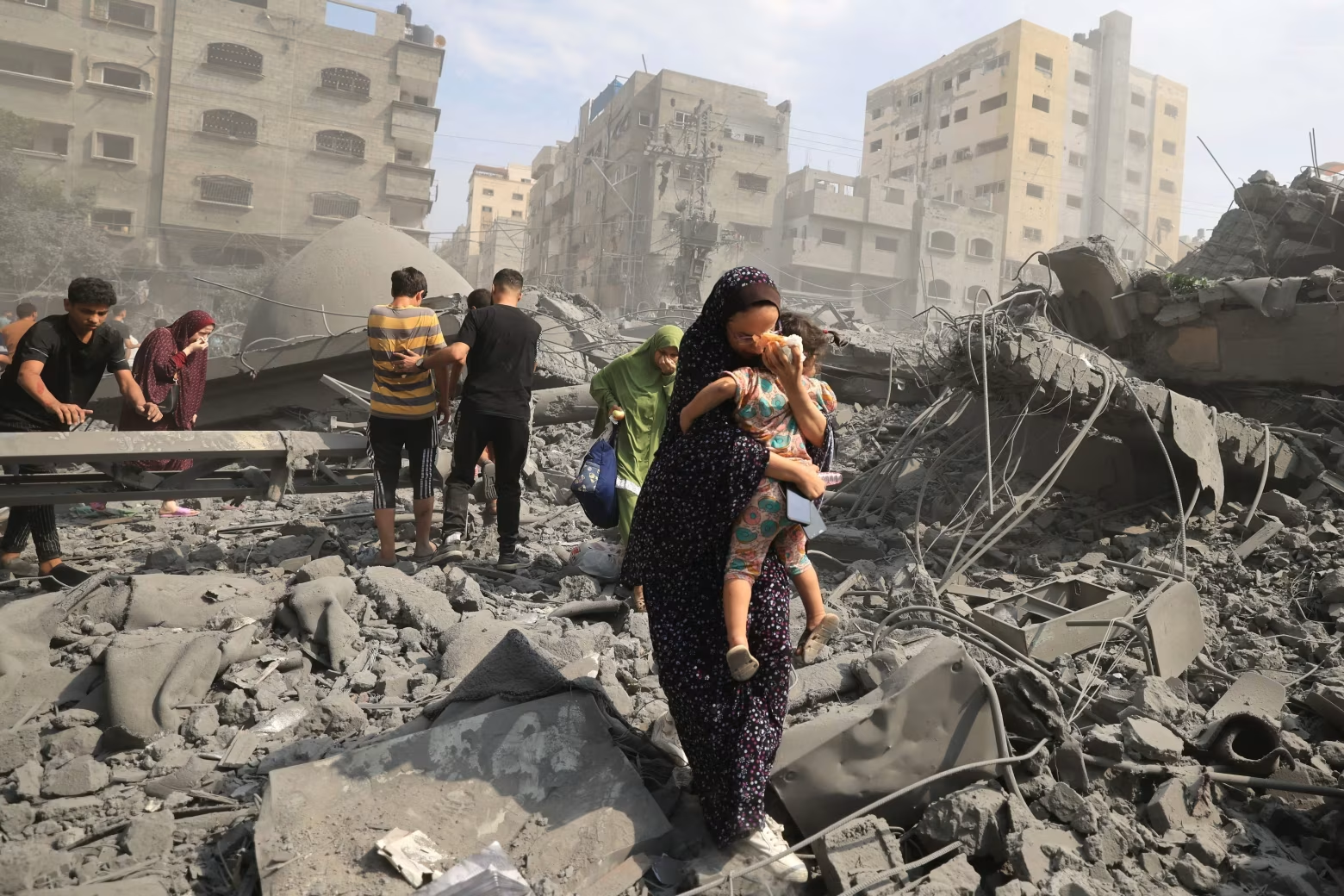
The aftermath of an airstrike on a mosque in Gaza City. ©Mahmud Hams/Agence France-Presse/Getty Images)
From Muhanad’s Life In Gaza Substack
The world keeps calling it a ceasefire, but Gaza’s reality tells a different story. According to a recent report¹, Israeli strikes on Wednesday killed at least twenty‑four Palestinians — among them two babies, five children, seven women, and a paramedic who died while trying to save others. Israel claimed it was responding to militant fire, but the bodies arriving at hospitals told a story that statistics can never fully hold.
At Shifa Hospital, its exhausted director asked the question that so many Gazans whisper every day: “Where is the ceasefire? Where are the mediators?”
Since the truce began in October, more than 550 Palestinians — half of them women and children — have been killed. The war has not paused. It has simply become quieter, more unpredictable, more suffocating.
And behind every number is a family trying to survive another day.
A Morning That Should Have Been Ordinary
While the world debated whether the ceasefire was “holding,” my friend Muhanad woke up to a rare moment of calm.
He and his wife sat with their children in a patch of sunlight, trying to warm themselves in the winter cold. He drank his coffee; she sipped her Nescafé. For a few minutes, life felt almost normal — a fragile, borrowed peace.
Then the gunfire started.
Not scattered shots. Not warning fire. Automatic, continuous, close enough to feel the air move.
“We couldn’t move,” he told me. “We felt the bullets passing around us… as if every shot was about to hit us.”
They grabbed their children and ran into the streets with nothing — no food, no water, not even enough clothing for the cold. They walked without direction, guided only by fear and the instinct to protect their children.
“These were moments very close to death,” he said.
For hours they remained displaced, wandering through streets that offered no safety, praying with every step that they would not be the next family counted among the dead.
Since the ceasefire began, they have slept well only a handful of nights. The rest have been spent listening for gunfire, waiting for the next strike, wondering if they will survive until morning.
Their home was hit again that day — more bullet holes, more damage, another reminder that even walls cannot protect them.
A Family Killed Before Sunrise
While Muhanad and his family were fleeing gunfire, another family in the Tuffah neighborhood was killed in an early‑morning strike. Eleven people died in that single attack — parents, children, a grandmother. Among them were a 10‑day‑old baby girl, Wateen Khabbaz, and her five‑month‑old cousin, Mira.
Their bodies were carried into Shifa Hospital, wrapped in blankets far too large for them.
At least 24 Palestinians dead as Gaza ceasefire faces new strain
“We Are Extremely Exhausted… and Very Afraid”
Later that day, Muhanad told me something that has stayed with me:
“I know these words may sound repetitive, and the updates may seem similar, but this is our daily life.”
He spoke of an elderly woman tortured by soldiers when she tried to return through the Rafah crossing and of his heartbreak of hearing her cry. He spoke of the silence of Western media, and the betrayal of Arab media — how the suffering of Palestinians rarely becomes headline news unless the death toll is too large to ignore.
“If this had happened to an Israeli elderly woman,” he said, “it would have spread across the world’s news.”
He is right.
Before sunset, his family returned home — exhausted, shaken, but alive.
“Today we survived,” he said. “I do not know if we will survive the next time.”
The Human Cost Behind the Headlines
The world reads numbers.
Gaza lives the stories behind them.
A ceasefire that does not protect children is not a ceasefire.
A truce that allows babies to be killed in their sleep is not a truce.
A pause that still forces families to run barefoot into the streets is not peace.
Muhanad ended his message with a plea:
“Your support and your messages give us real strength.
Please share this update so people can know what is happening here.”
So I am sharing it — his words, his fear, his exhaustion, his courage — because the world needs to understand that Gaza is not living in a post‑war moment. It is living in a war that refuses to end.
And families like his are trying to survive it one day at a time.
A Place to Help
If you feel moved to support families like Muhanad’s, here is the GoFundMe created for them. Your help goes directly to food, shelter, and survival needs.
Footnote
¹ Factual context in this article is informed by reporting from the Hindustan Times on February 5, 2026, which documented the strikes and casualties in Gaza. All personal testimony comes directly from Muhanad.
Source: Muhanad’s Life In Gaza
Discover more from The New Palestine Post
Subscribe to get the latest posts sent to your email.


