
n a little-noticed move that has drawn criticism from disarmament advocates, the U.S. Department of Defense has finalized what appears to be the largest known contract for cluster-type weapons with an Israeli state-owned arms company, according to reporting by The Intercept.
Under the agreement, the Pentagon will pay roughly $210 million over several years to the Israeli firm Tomer to produce a new class of 155 mm cluster artillery shells — munitions designed to release multiple explosive submunitions over a wide area.
A Shift in Direction — From Selling to Buying
The deal marks a reversal in the usual flow of U.S.–Israel arms transfers. Rather than Washington supplying weapons to Tel Aviv, the U.S. government is now purchasing weapons from an Israeli defense contractor — a rare step in their long-standing military relationship.
Pentagon sources said the contract was signed in September but has not been widely disclosed until The Intercept’s reporting, raising questions about transparency in the U.S. military procurement process.
“I have not seen something like this before — a sole source contract to a foreign military contractor for $200 million.”
Julia Gledhill, military contracting researcher for the Stimson Center, a Washington-based foreign policy think tank
What Cluster Munitions Are — and Why They Are Controversial
Cluster munitions disperse dozens or even hundreds of smaller bomblets across a broad area when fired or dropped. While intended to disable enemy vehicles and troops, a significant percentage of these submunitions often fail to detonate on impact and become long-term explosive hazards. This creates “fields of antipersonnel mines” that can remain lethal for years after conflicts end.
Because of these effects, an international treaty known as the Convention on Cluster Munitions prohibits the use, production, transfer, and stockpiling of such weapons. More than 100 countries have signed the treaty, but key military powers — including the United States and Israel — have not acceded to it. Humanitarian groups say cluster weapons pose a particular danger to civilians, especially children, long after hostilities cease, because unexploded bomblets are difficult to detect and remove.
The Guadian reported that Israel used widely banned cluster munitions in its recent 13-month war in Lebanon, sharing photos of munition remnants in south Lebanon.
The images, which have been examined by six different arms experts, appear to show the remnants of two different types of Israeli cluster munitions found in three different locations: south of the Litani River in the forested valleys of Wadi Zibqin, Wadi Barghouz and Wadi Deir Siryan.

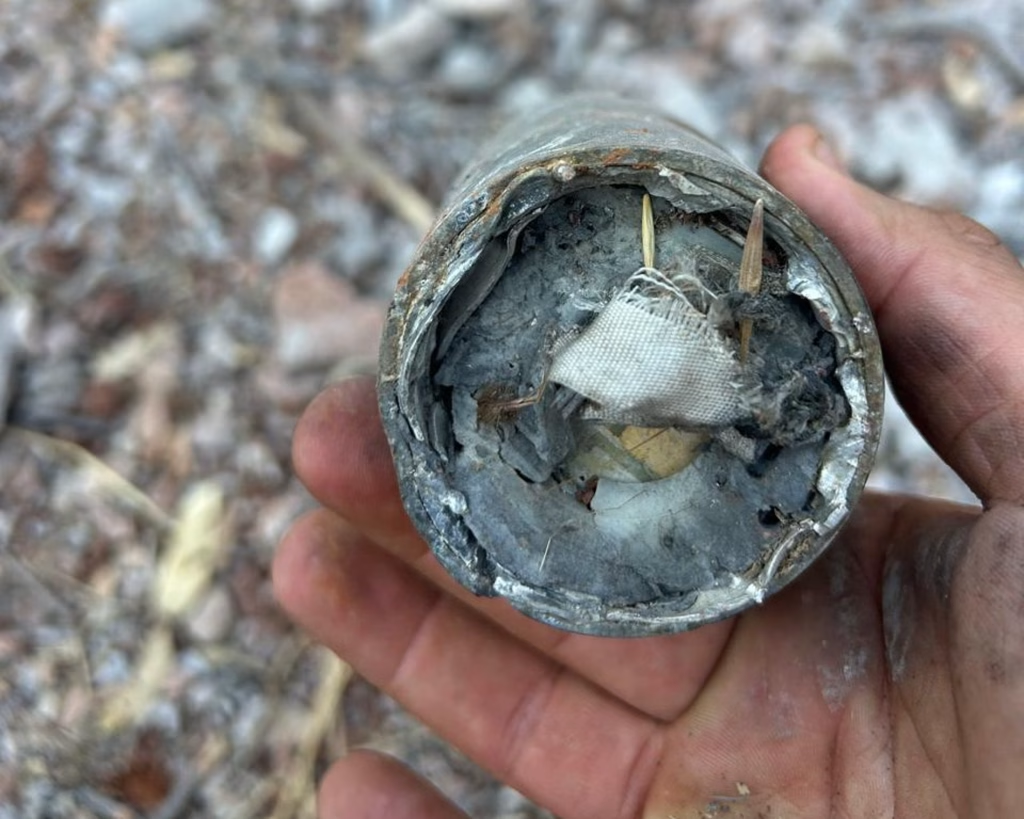
“Cluster munitions are banned internationally for a reason. They are inherently indiscriminate and there is no way to employ them lawfully or responsibly, and civilians bear the brunt of the risk as these weapons stay deadly for decades to come.”
Brian Castner, the head of crisis research at Amnesty International
The evidence is the first indication that Israel has used cluster munitions in nearly two decades since it employed them in the 2006 Lebanon war. It would also be the first time that Israel was known to have used the two new types of cluster munitions found – the 155mm M999 Barak Eitan and 227mm Ra’am Eitan guided missiles.
Source: The Intercept | The Guardian
Discover more from The New Palestine Post
Subscribe to get the latest posts sent to your email.


