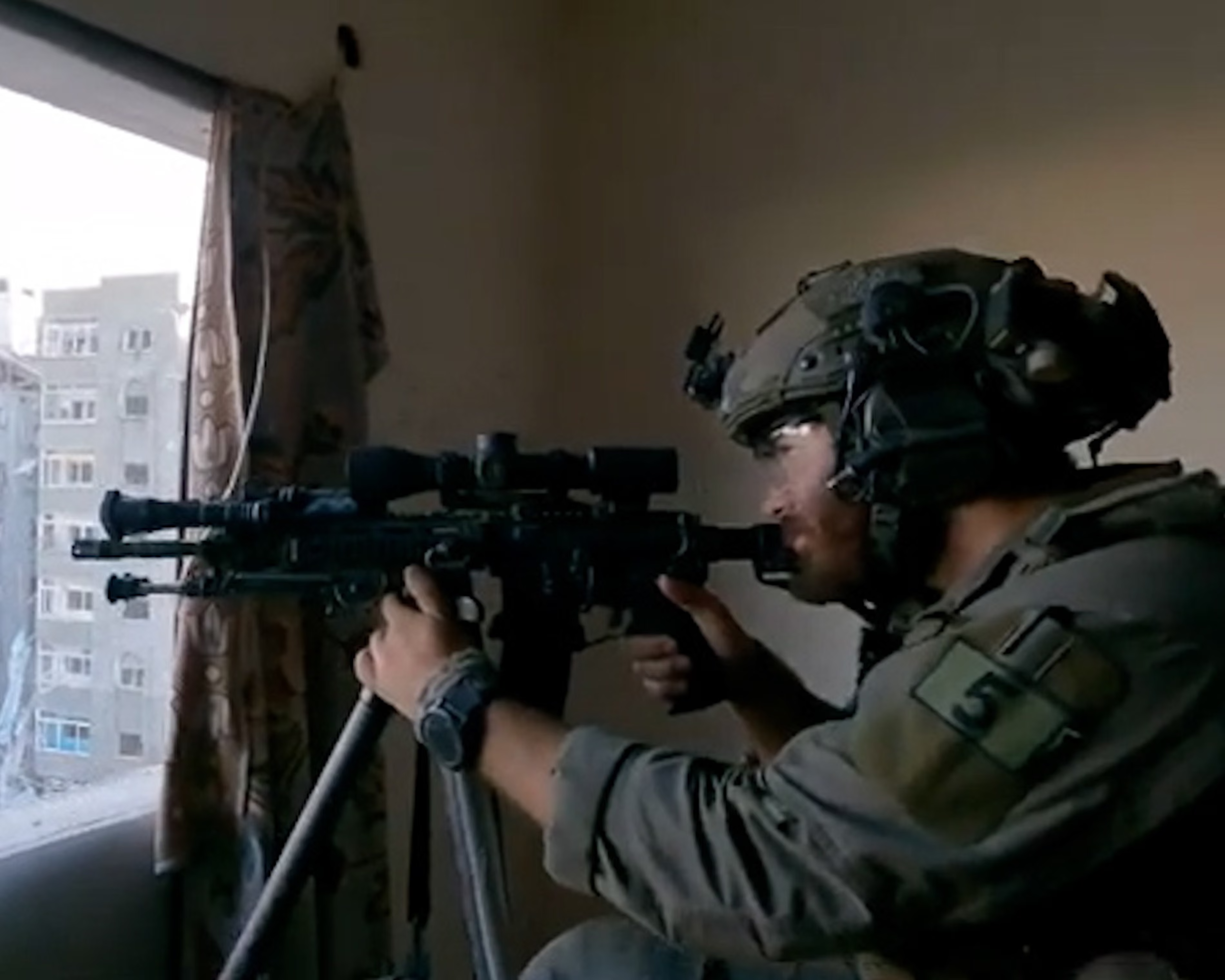
Raab and Graetz’s location has been traced from photos and videos taken by Israeli soldiers showing the two snipers aiming their weapons through a window and a hole in the wall. Photo: YouTube
On 22 November 2023, the Doghmosh family in Gaza City was shattered. What began as a short walk toward a nearby park ended in the deaths of four relatives and serious injuries to two others. A five-month investigation by The Guardian, ARIJ, Paper Trail Media, Der Spiegel and ZDF has now revealed that the shooters were not anonymous figures behind rifle scopes. They were identified as Israeli snipers with roots in Chicago and Munich.
The Doghmosh Family Tragedy
On 22 November 2023, in Gaza City’s Tal al-Hawa district, 26-year-old Mohammed Doghmosh walked with his cousin Youssef toward a nearby park. Neither man carried weapons. Within minutes, Mohammed was felled by sniper fire.
His teenage brother, Salem, ran to recover the body. He too was shot. Their father, Montasser, and another cousin, Mohammed Farid, met the same fate when they tried to intervene. Two more relatives were left wounded.
The sniper position was later geolocated to a six-storey building overlooking the street, its walls marked by graffiti resembling the number nine with devil horns and a tail — the emblem of the sniper squad occupying it.
“That was my first elimination,” he says. The video, shot by a drone, lasts just a few seconds. The Palestinian teenager appears to be unarmed when he is shot in the head.
Snipers with Western Roots
The investigation names the shooters as Daniel Raab, raised in Chicago, and Daniel Graetz, raised in Munich. Both were part of a group that called itself the refaim (“ghosts” in Hebrew).
Raab, in recorded interviews, described the unit’s tactics. He admitted firing on those collecting bodies and explained that any man of “military age” was considered “marked for death.” Civilians, he said, were subject to an “invisible security perimeter” — arbitrary boundaries invisible to those on the ground but enforced with lethal force.

War Crimes Allegations
Legal experts consulted for the investigation say the evidence points to violations of international humanitarian law. Under the Geneva Conventions, civilians are protected, and those recovering the dead and wounded enjoy special protections.
“Targeting unarmed civilians, especially during rescue attempts, is unlawful and could amount to war crimes,” one international law specialist said.
The Israeli military declined to respond to the specific allegations but issued a broad statement insisting its forces operate under strict rules of engagement and international law.
A Pattern of Targeting and the Banality of Evil
The phrase the banality of evil, coined by Hannah Arendt, appears all too fitting. Here, the perpetrators—dual nationals living in western cities—were not grotesque monsters but apparently ordinary individuals who, when placed in a militarized environment, executed lethal orders or impulses. Raab’s chilling admission—“It’s hard for me to understand why he [Salem] tried to retrieve the body, and it doesn’t really interest me… What was so important about that corpse?”—reveals a profound moral detachment.

This kind of disconnection, where violence becomes routine, reflects how systemic structures can strip away empathy until killing becomes banal. The Doghmosh case appears to reflect a broader trend. Multiple testimonies from across Gaza describe a pattern of unarmed Palestinian men between 18 and 40 being treated as legitimate targets. Rescue attempts often attract additional fire.
The notion of “invisible perimeters” is particularly alarming to rights groups. Civilians cannot know when they have crossed an unmarked boundary until it is too late.
International Repercussions
The fact that the alleged snipers have personal ties to the United States and Germany raises difficult questions for their countries of origin. Could foreign jurisdictions pursue accountability for their nationals’ actions abroad? Human rights organisations are already pressing for international investigations.
“States have obligations not to allow their citizens to commit atrocities with impunity,” said one human rights lawyer. “This case could set a precedent for legal action beyond Israel.”
As evidence mounts, this is a credibility test for the international community. If the Geneva Conventions mean anything, if the International Criminal Court has any relevance, then cases like this cannot be ignored. Justice may be slow, but impunity must not be guaranteed.
The surviving members of the Doghmosh family do not expect justice from courts. Some speak only of divine retribution. That in itself is an indictment of a world order that promises protection but delivers nothing.
Source: The Guardian
Discover more from The New Palestine Post
Subscribe to get the latest posts sent to your email.


